
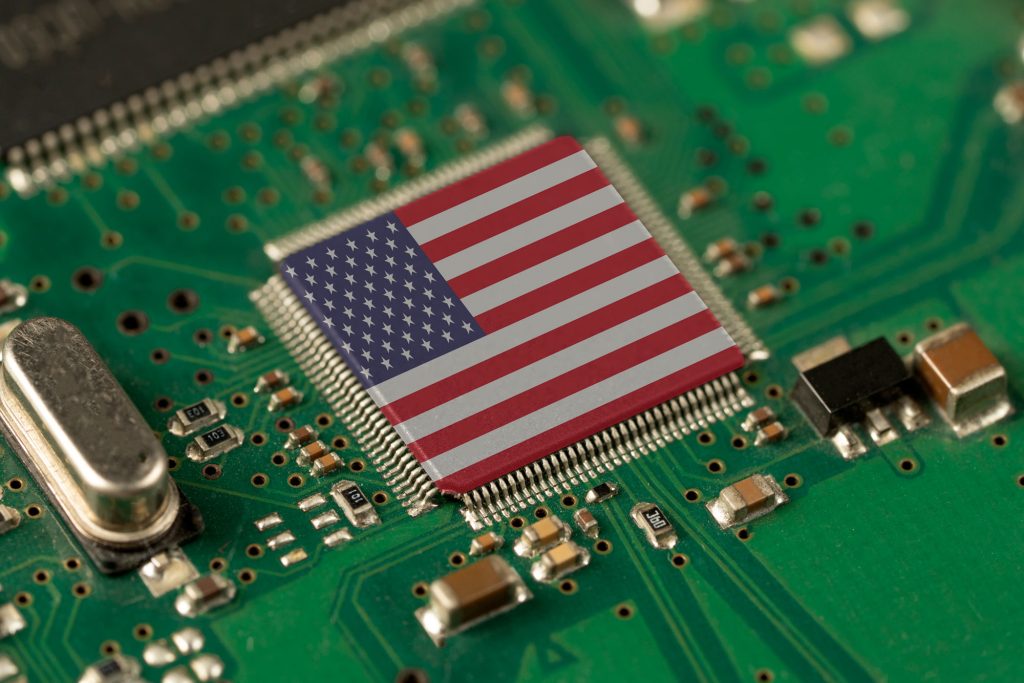
The United States is preparing to reshape its semiconductor export rules. Officials say Washington is considering annual renewals for approvals that allow South Korea’s Samsung Electronics and SK Hynix to operate advanced factories in China.
This would replace the current multi-year or open-ended approvals. The change introduces uncertainty for two of the world’s largest memory chip producers and for the global supply chains that rely on them.
Washington’s Strategic Calculus
The proposed policy reflects Washington’s effort to maintain leverage in the tech competition with China. Annual renewals give the U.S. flexibility. Each year, officials could extend, tighten, or revoke approvals based on diplomatic, security, or trade considerations.
The plan aims to limit China’s access to advanced semiconductor technology. At the same time, it avoids a complete disruption of global chip supplies, which would affect U.S. companies, allies, and international markets.
Implications for Samsung and SK Hynix
South Korea’s chipmakers face several challenges:
-
Strategic Planning Challenges
Semiconductor manufacturing requires long investment cycles. Firms usually plan capital expenditure, supply contracts, and tech upgrades over three to five years. Annual approvals compress that planning horizon. -
Operational Costs and Risk Hedging
Samsung and SK Hynix may need to stockpile critical equipment and materials or build alternative production outside China. These strategies increase costs and reduce efficiency. -
Investor Sentiment and Market Valuations
Global investors may price in a geopolitical risk premium. Short-term approvals allow factories to run, but the threat of future revocation may limit valuations compared to peers with less exposure.
Broader Market Impact
The semiconductor sector is sensitive to geopolitics. The policy change could have multiple effects:
-
Memory Prices: Samsung and SK Hynix produce more than half of global DRAM and NAND chips. Any disruption in China could tighten supply and raise prices worldwide.
-
Equipment Vendors: Companies supplying etching and lithography machines may face revenue uncertainty as clients navigate approval risks.
-
Supply Chain Realignment: Nations like the U.S., Japan, and the EU are offering subsidies for local chip production. This may accelerate regional diversification of semiconductor supply chains.
Geopolitical Angle
This is also a geopolitical move. Annual approvals give the U.S. leverage over South Korea, which relies on both the U.S. and China.
-
For the U.S.: Annual approvals provide a tool in trade talks and reinforce national security objectives.
-
For South Korea: Seoul must balance security ties with Washington against economic ties with Beijing.
-
For China: The policy underscores Beijing’s need for semiconductor self-sufficiency. Advanced memory production still depends heavily on foreign technology.
Market Outlook
Immediate market reaction has been muted. Semiconductor stocks show limited volatility. Analysts warn that the true risk lies in future renewals. A denial could trigger sharp price swings in memory chips.
-
Short-Term: Investors should monitor U.S. policy updates, South Korea’s response, and any diplomatic pushback from Beijing.
-
Medium-Term: Samsung and SK Hynix may accelerate investments in South Korea, the U.S., or other allied countries.
-
Long-Term: Policy risk will shape the semiconductor industry as much as technology cycles. Export controls, subsidies, and geopolitics will influence global markets.
Conclusion
The U.S. plan for annual approvals of China-based chip operations marks a turning point for the semiconductor industry. It increases uncertainty for Samsung and SK Hynix while intensifying the U.S.–China tech rivalry.
For investors, policymakers, and industry leaders, the message is clear: the era of frictionless global semiconductor supply chains is over. Technology, politics, and national security are now tightly intertwined.
Focus keyphrase: “U.S. annual approvals China chip supplies”
Meta description: The U.S. may impose annual approvals on Samsung and SK Hynix’s China chip operations, reshaping supply chains and adding policy risk to global semiconductors.
Tags: technology, semiconductors, us china, samsung, sk hynix, export controls, geopolitics, memory chips, global supply chain