Overview
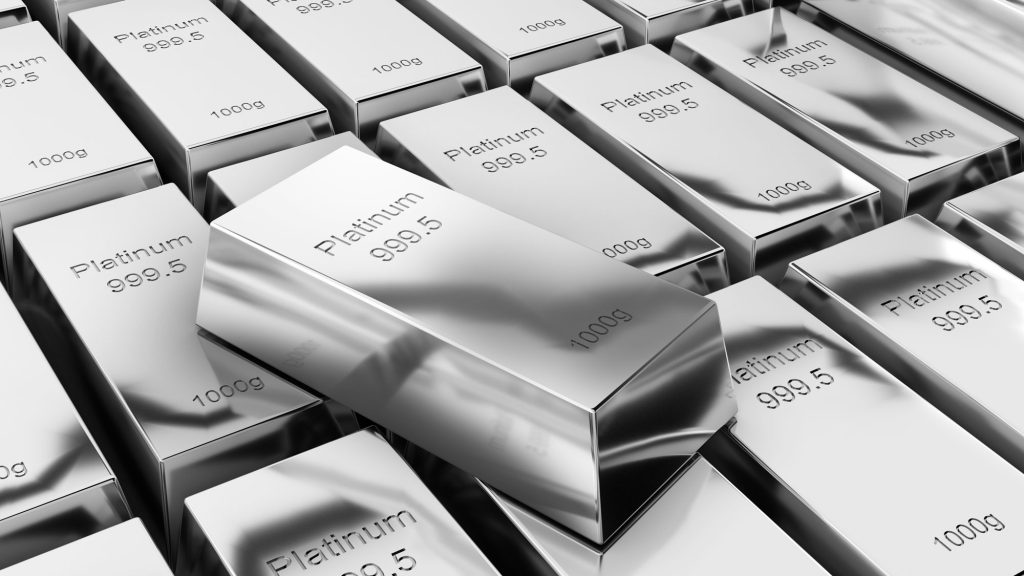
Platinum, a precious metal widely used in industry and investment portfolios, is currently facing significant bearish pressure amid a confluence of technical breakdowns and unfavorable market fundamentals. On August 7, 2025, the metal slipped below the key psychological and technical support level of $1,342, marking several consecutive negative closes that have intensified selling momentum. This development raises concerns among traders and investors that platinum’s downward trend may extend further in the near term.
Technical Analysis: Breakdown Below Critical Support Levels
Platinum’s price has been struggling to maintain its footing below important moving averages — specifically, the 50-day and 200-day simple moving averages (SMA) — which typically act as dynamic resistance or support points. Currently, the price remains firmly below these averages, underscoring a continuation of the bearish trend.
-
Support and Resistance: The $1,342 level, which acted as a significant support zone in recent months, was decisively broken. This has opened the door for further declines toward the next major support area near $1,320. If this level fails to hold, platinum could experience accelerated downward pressure toward the $1,280 to $1,250 range, levels last seen earlier this year.
-
Momentum Indicators: The Relative Strength Index (RSI) is now well into oversold territory, hovering below 30. While this often signals that a metal is due for a short-term rebound or consolidation, the absence of bullish volume or momentum confirms that the selling pressure remains dominant. The Moving Average Convergence Divergence (MACD) indicator also continues to show bearish crossover signals, reinforcing the negative outlook.
-
Volume Trends: Trading volume has increased during sell-offs, suggesting strong conviction among sellers and confirming the technical breakdown rather than a temporary dip.
Fundamental Factors Driving the Bearish Outlook
1. Weak Industrial Demand and Economic Headwinds
Platinum’s industrial demand, particularly from automotive manufacturers producing catalytic converters, is a crucial price driver. Recent economic data from Europe, the United States, and China shows slowing industrial production and weakening vehicle sales. Given platinum’s use in emission control technologies, any downturn in auto manufacturing directly reduces metal demand.
Furthermore, global supply chain constraints continue to hamper production schedules and increase costs, further weakening demand projections. These economic headwinds cast a shadow over near-term consumption forecasts for platinum.
2. Strengthening U.S. Dollar Puts Pressure on Commodities
The U.S. dollar has experienced relative strength against a basket of currencies amid expectations of further monetary tightening by the Federal Reserve and other major central banks. Since platinum is priced in U.S. dollars, a stronger dollar makes it more expensive for holders of other currencies, effectively reducing global buying power.
This currency dynamic traditionally acts as a headwind for dollar-denominated commodities like platinum, silver, and gold, contributing to price depreciation.
3. Rising Interest Rates and Inflation Dynamics
Higher interest rates worldwide, aimed at combating persistent inflation, increase the opportunity cost of holding non-yielding assets like platinum. Investors tend to prefer interest-bearing instruments during tightening cycles, resulting in diminished demand for precious metals as safe-haven or inflation-hedging assets.
Moreover, inflation uncertainty continues to influence investor sentiment. Although precious metals generally benefit from inflation fears, the prevailing rate hike cycle is currently outweighing these inflationary pressures, keeping platinum prices suppressed.
Market Sentiment and Investor Behavior
Market sentiment toward platinum remains cautious to bearish, with many traders positioning for continued declines. Hedge funds and commodity traders have increased their short positions on platinum futures, betting on further price drops.
Investment demand from exchange-traded funds (ETFs) tracking platinum has also tapered off, signaling reduced investor appetite. Additionally, geopolitical tensions and global economic uncertainties, while typically supportive of precious metals, have so far failed to generate meaningful bullish momentum in platinum.
Outlook and Price Forecast
The combination of technical breakdowns and weakening fundamentals suggest that platinum prices could continue to trend lower in the near to medium term.
-
Short-Term Scenario: In the immediate term, prices may test support around $1,320, and if breached, fall toward the $1,300 psychological level. A sustained breakdown below $1,300 would open the door for a decline to $1,280 or lower.
-
Potential Reversal Signs: For the bearish trend to reverse, platinum must reclaim and close above the $1,350 resistance level, coupled with a recovery in technical momentum indicators such as the RSI moving above 50 and MACD showing bullish crossover.
-
Longer-Term Factors: Monitoring industrial demand recovery, U.S. dollar trends, and interest rate decisions will be key to gauging medium and long-term price direction.
Summary
-
Platinum faces persistent bearish pressure after breaking below key $1,342 support
-
Technical indicators, including moving averages, RSI, and MACD, confirm continued downside momentum
-
Weak industrial demand, particularly from the automotive sector, dampens consumption outlook
-
A strengthening U.S. dollar and rising global interest rates add to bearish sentiment
-
Near-term support levels at $1,320 and $1,300 are critical; failure to hold may lead to further declines toward $1,280
-
A meaningful reversal requires overcoming resistance at $1,350 alongside improved technical momentum.