
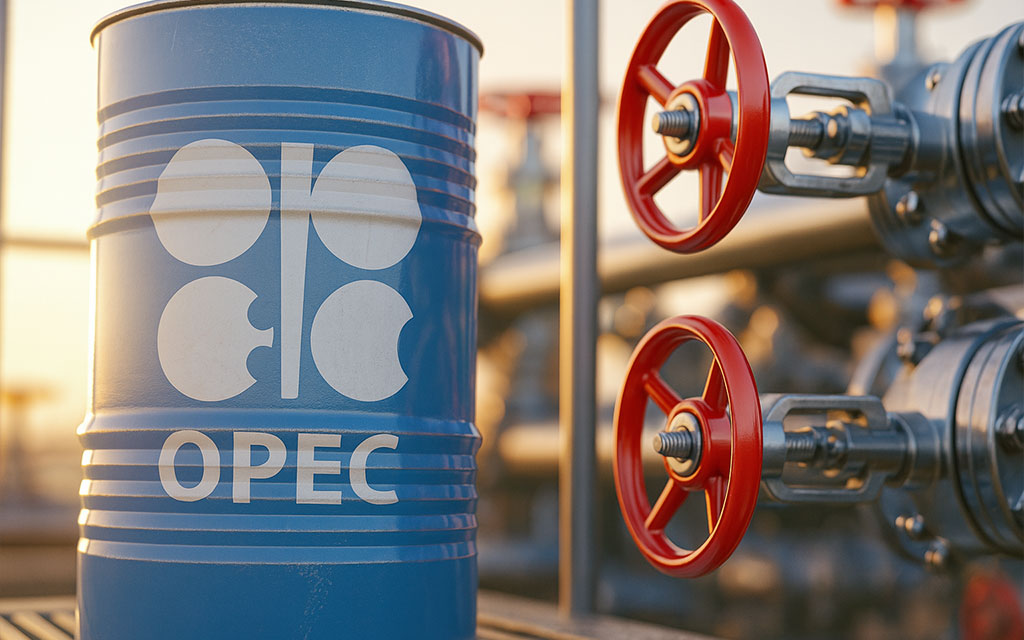
In a much-anticipated move, the OPEC+ alliance has agreed to increase oil production by 548,000 barrels per day (bpd) starting in August 2025, easing part of the 2.2 million bpd voluntary cuts made last year. The decision reflects cautious optimism about the global economy—but also injects fresh uncertainty into oil markets already grappling with fragile demand, especially in China and Europe.
A Strategic Step Toward Normalization
This marks the third consecutive month of incremental supply restoration by OPEC+, a coalition led by Saudi Arabia and Russia. Ministers said the gradual supply return is a response to “signs of balanced inventories” and a “constructive macroeconomic outlook,” even as short-term indicators remain mixed.
“We are proceeding with care—not flooding the market,” said one OPEC+ delegate.
Yet analysts warn that the extra supply could be poorly timed if global demand remains sluggish.
China Demand Fails to Impress
China, the world’s second-largest oil consumer, reported that crude imports rose by only 0.3% year-over-year in the second quarter—far below expectations. Industrial activity remains subdued, and recent refinery throughput data shows little sign of acceleration.
Other demand-side warning signs:
-
European fuel consumption remains below pre-pandemic levels.
-
U.S. gasoline demand is soft despite the summer driving season.
-
Global aviation fuel demand is lagging, with international flights still not fully recovered.
Price Reaction and Market Impact
Following the OPEC+ announcement:
-
Brent crude dipped to $68.58 per barrel
-
WTI fell to $66.88 per barrel
-
Energy sector equities saw minor losses on oversupply concerns
Oil market volatility ticked higher, with WTI futures volume up 12% compared to the prior week. Traders are now adjusting hedging strategies ahead of the August supply increase.
OPEC+ Walking a Tightrope
OPEC+ is attempting to strike a balance between stabilizing prices and preventing demand destruction. The organization’s internal consensus appears strong for now, but risks remain:
-
U.S. shale producers may ramp up output in response, creating competitive pressure.
-
Geopolitical tensions (Iran, Russia sanctions) could disrupt flows unexpectedly.
-
Climate policies in the EU and U.S. may further dampen long-term fossil fuel demand.
Despite this, OPEC+ has not ruled out pausing or reversing output increases if prices slide below comfort levels.
What Traders Should Watch
-
Inventory levels in the U.S., China, and OECD countries
-
Refinery margins as indicators of end-user demand
-
Currency moves in petro-linked markets like the Canadian dollar (CAD) and Russian ruble (RUB)
-
Next OPEC+ meeting, scheduled for September 2025, where Q4 guidance may be adjusted
Conclusion
The 548,000 bpd production hike from OPEC+ underscores a delicate gamble: bet on a modest global recovery, while risking a renewed slide in prices. If demand fails to catch up, the market may once again test the alliance’s discipline and unity. For now, oil traders should prepare for a volatile second half of 2025.
ForexFlash will continue to monitor price dynamics, geopolitical shifts, and market sentiment in the oil sector.