
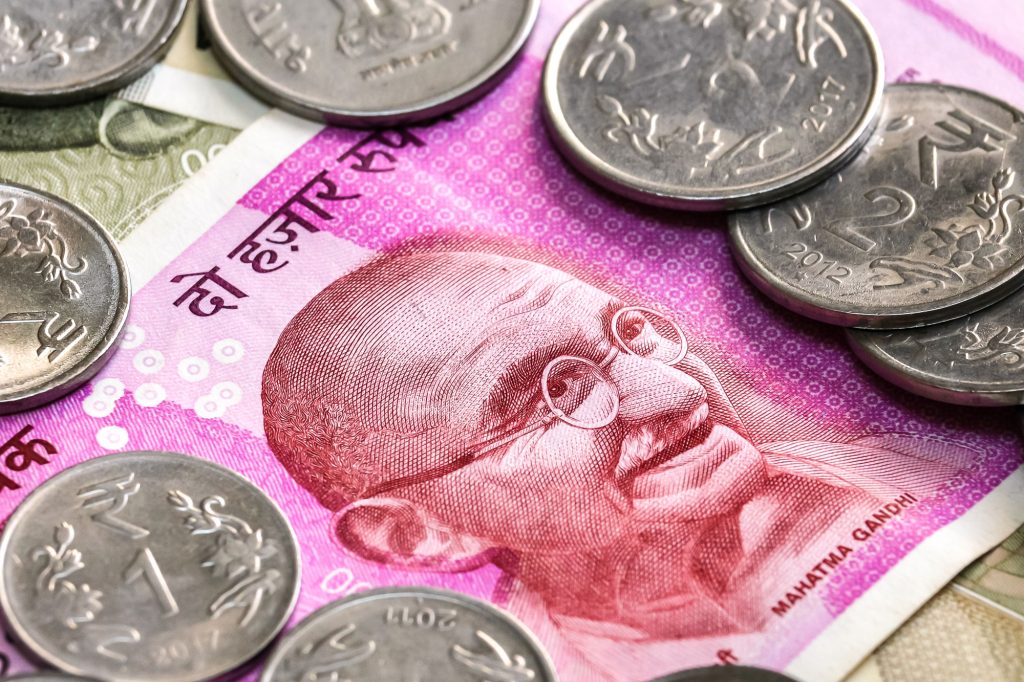
Rupee Holds Firm Despite Global Pressure
The Indian rupee (INR) opened between ₹87.62 and ₹87.68 per U.S. dollar on August 28, 2025. Despite new U.S. tariffs on Indian goods, the rupee remained stable. This resilience is supported by growing expectations of a Federal Reserve rate cut and likely intervention by the Reserve Bank of India (RBI).
The currency market reacted cautiously. However, optimism around lower U.S. interest rates and India’s strong central bank presence gave the rupee breathing room.
Why the Rupee is Holding Its Ground
1. 🏛️ Fed Rate Cut Hopes Boost Sentiment
Investors expect the U.S. Federal Reserve to cut interest rates in September. This view follows recent dovish remarks from Fed officials. Notably, New York Fed President John Williams indicated openness to easing.
As a result, the U.S. dollar lost some strength. This shift favors emerging markets like India, where higher returns on assets attract foreign capital.
“The softening Fed stance has given the rupee space to recover,” said Priya Mehta, FX Strategist at FinEdge Markets.
2. 🛡️ RBI’s Role in Currency Stability
The RBI likely sold dollars through state-run banks on Wednesday and Thursday. Although there was no official confirmation, traders noted heavy dollar selling, hinting at central bank intervention.
This is a common strategy. The RBI doesn’t aim for a fixed rupee level, but it actively steps in to prevent sharp movements. With foreign reserves above $660 billion, the RBI has enough strength to influence markets.
“They’ll act if they see volatility. Stability is the goal, not control,” said Anuj Malhotra, FX Head at Axis Capital.
3. 💼 U.S. Tariffs Add Headwinds
Earlier this week, the U.S. imposed new tariffs on Indian goods, including pharmaceuticals, electronics, and textiles. This decision was based on what U.S. officials called “persistent trade imbalances.”
Despite this, the rupee’s decline was muted. RBI intervention and strong domestic buying helped the currency remain in a tight range.
Still, traders remain alert. If tensions escalate, INR could face renewed pressure.
Technical Analysis: Key Levels to Watch
The USD/INR pair is now trading near a crucial resistance zone. Here’s what technical indicators suggest:
-
Support: ₹87.40 and ₹87.00
-
Resistance: ₹88.00 (psychological barrier)
-
Trend: Neutral to slightly bearish for USD
-
RSI: Around 52 — indicating a balanced market
If the Fed maintains a dovish tone and no major trade shocks occur, the pair may drift toward ₹87.20. On the flip side, more tariffs or stronger U.S. economic data could push USD/INR above ₹88.00.
Market Reactions Across Sectors
-
Equities: The Nifty 50 and Sensex were flat in early trading. Investors are focused on global monetary policy signals.
-
Bond Yields: India’s 10-year government bond yield dipped slightly to 6.92%.
-
Capital Flows: Foreign institutional investors (FIIs) remain net buyers amid favorable rate differentials.
India’s Strong Fundamentals Provide Support
India’s macroeconomic indicators continue to support the rupee:
-
GDP growth is healthy at 6.4%
-
Inflation has cooled to 4.1%
-
Trade deficit has narrowed
-
Forex reserves remain above $660 billion
Compared to other emerging markets, India’s currency is less volatile. For example, both the Indonesian rupiah and South African rand have experienced larger losses this quarter.
Conclusion: Rupee Stability Backed by Policy and Optimism
The Indian rupee is managing to hold its ground. While the global environment remains uncertain, two factors offer crucial support — a possible U.S. rate cut and active RBI management.
If the Fed follows through with policy easing and India avoids further trade tensions, the rupee may continue to trade within a stable band. For now, the currency market is walking a tightrope — but the balance is holding.