Analysts are increasingly suggesting that commodities may be entering a new supercycle. This cycle is driven by a combination of structural supply constraints, rising demand from megatrends, and favorable financial conditions. Historically, supercycles have occurred when major geopolitical, technological, or economic shifts create sustained imbalances between supply and demand, leading to multi-year price rallies. Examples include the oil shocks of the 1970s and China’s industrial boom in the 2000s.
Supply Constraints and Geopolitical Risks
Global supply chains for key commodities remain highly concentrated, making markets vulnerable to geopolitical disruptions. For example:
-
Chile and Peru dominate global copper production, critical for electrification and renewable energy technologies.
-
China controls a large portion of the rare earth refining industry, essential for high-tech electronics and EV batteries.
Recent geopolitical developments, such as export restrictions and trade disputes, have added to supply-side pressure. Additionally, underinvestment in oil production and aging infrastructure in mining regions has kept supplies tight. Crude oil demand remains relatively inelastic, as it underpins transportation, manufacturing, and energy sectors. Low inventories across multiple commodities further amplify market sensitivity.
Rising Demand from Global Megatrends
Demand for commodities is being propelled by long-term megatrends, including electrification, renewable energy adoption, urbanization, and technological advancements.
-
Copper: Essential for electric vehicles (EVs), renewable energy grids, and digital infrastructure. The International Energy Agency projects a 30% shortfall by 2035.
-
Lithium, Cobalt, Nickel: Key materials for EV batteries and energy storage, experiencing surging demand due to global green energy policies.
-
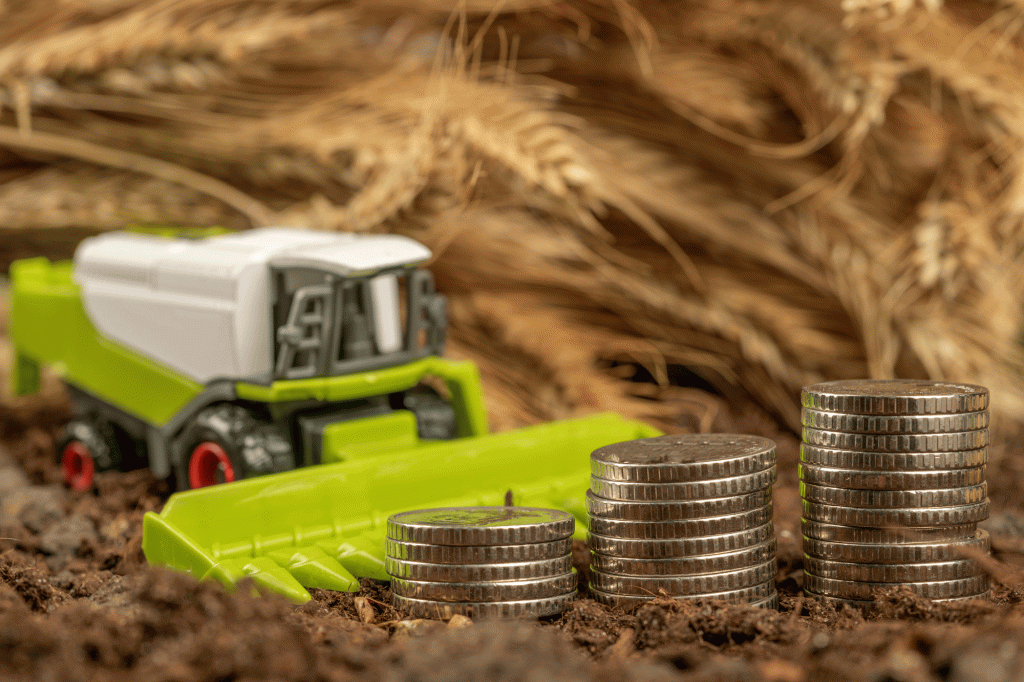
Agricultural Commodities: Population growth and dietary shifts in emerging economies are driving higher demand for grains, protein, and edible oils.
Analysts argue that these trends could sustain high demand for metals, energy, and agricultural commodities for several years, forming the foundation for a supercycle.
Financial and Market Drivers
Financial factors also support a potential supercycle. Commodities have become more attractive relative to traditional asset classes:
-
Equities vs. Commodities: High equity valuations and market volatility are prompting investors to diversify into commodities.
-
Inflation Hedge: Persistent inflation pressures reduce the appeal of bonds and cash, making commodities a preferred inflation hedge.
-
Monetary Policy: Low global interest rates and expansive fiscal programs have increased liquidity, supporting higher commodity prices.
This combination of macroeconomic and financial factors is creating an environment reminiscent of previous commodity supercycles. Investors are beginning to recognize commodities not just as industrial inputs, but as strategic portfolio assets.
Sector-Specific Implications
Energy: Oil and natural gas remain core drivers. Limited spare capacity and rising demand from Asia support elevated prices. Renewable energy infrastructure adds further demand for industrial metals used in turbines and solar panels.
Metals: Copper, aluminum, nickel, and lithium are poised for strong performance due to electrification and EV adoption. Supply shortages in critical regions may push prices higher.
Agriculture: Growing populations, climate-driven crop disruptions, and dietary shifts are creating upward pressure on grains, oilseeds, and proteins. Investors may consider futures contracts or ETFs to gain exposure.
Trading Strategies for Investors
Investors looking to capitalize on the emerging supercycle should:
-
Diversify Exposure: Consider ETFs or mutual funds covering energy, metals, and agricultural commodities.
-
Direct Investments: Explore mining or energy production companies for leveraged exposure, while managing operational and geopolitical risks.
-
Risk Management: Monitor supply disruptions, geopolitical developments, and global demand shifts to adjust positions.
-
Hedging: Use commodity derivatives, such as futures or options, to hedge against volatility in industrial inputs or energy prices.
Macro Outlook and Future Trends
Analysts suggest that the new supercycle could last 5–10 years, supported by:
-
Continued global electrification and clean energy adoption.
-
Ongoing underinvestment in traditional commodity production.
-
Policy-driven demand from emerging markets.
-
Financial conditions favoring commodity investment.
While short-term volatility is expected, long-term fundamentals indicate that commodities may outperform other asset classes over the next decade. Strategic investors will need to balance cyclical opportunities with risk management to maximize returns.