
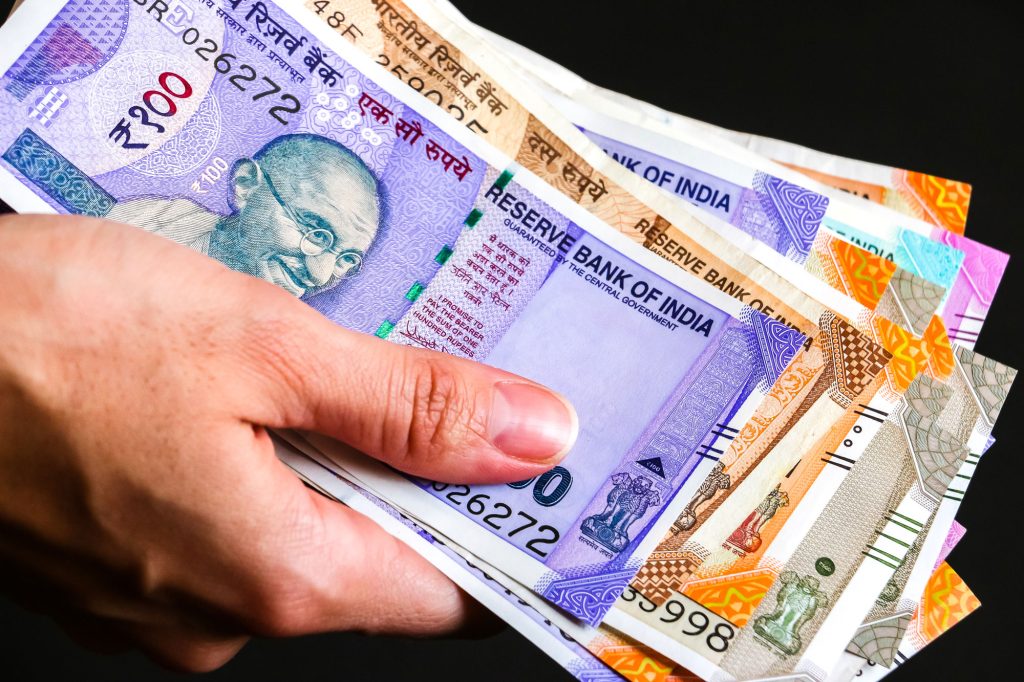
The Indian rupee is set to open weaker against the U.S. dollar on Monday as global investors respond to the Federal Reserve’s recent policy moves and rising risk aversion. Non-deliverable forwards indicated the rupee could open in the ₹88.18–₹88.22 range per dollar, compared with its previous close of ₹88.09. This forecast signals that bearish pressures continue to build on the currency.
Dollar Strength Extends After Fed Policy Shift
The Federal Reserve’s rate cut earlier this month initially weakened the dollar, but cautious commentary from policymakers has since reversed that trend. Investors now expect fewer rate cuts in 2025 than previously anticipated. This reassessment has driven U.S. Treasury yields higher and restored the dollar’s appeal.
For the rupee, the dollar’s rebound spells more trouble. A stronger greenback increases capital outflows from emerging markets and reduces foreign appetite for riskier assets. Traders believe this dynamic will persist unless there is a meaningful change in global economic conditions.
Weak Foreign Flows Add Pressure on the Rupee
The currency faces additional headwinds from weak foreign investment in Indian markets. Data shows foreign portfolio investors have sold nearly $900 million in Indian equities during September. This outflow reflects concerns about global growth, the U.S. interest rate path, and domestic risks such as policy uncertainty and high valuations in Indian stocks.
Analysts argue that until inflows return, the rupee’s downside bias will remain intact. Lower demand for Indian assets reduces support for the currency, forcing traders to position for more depreciation.
Uncertainty in U.S. Visa Policy and IT Sector Impact
Adding to the pressure, U.S. policy debates over visa rules for skilled workers have raised concerns about India’s IT sector, one of the country’s largest foreign exchange earners. Tighter visa regulations could reduce the flow of business for Indian IT companies and weaken investor confidence. While these policy shifts remain uncertain, they have already created a cautious mood among traders and investors.
RBI’s Role and Possible Intervention
The Reserve Bank of India (RBI) has historically intervened in currency markets to prevent excessive volatility. Market participants are now watching closely for any signs of action. However, unless the RBI makes significant dollar sales or global sentiment shifts, the rupee could slide further toward ₹88.50 in the near term.
The central bank faces a delicate balancing act. Excessive intervention may deplete reserves and limit policy flexibility, while inaction could encourage speculative selling. Traders expect the RBI to adopt a gradualist approach, smoothing volatility without defending a specific level.
Outlook for Traders and Investors
The rupee’s trajectory in the coming weeks will depend on three key factors: the U.S. dollar’s strength, global risk appetite, and foreign investor flows into India.
-
Bearish Scenario: If U.S. yields rise further and investors continue pulling out of Indian equities, the rupee could weaken beyond ₹88.50.
-
Neutral Scenario: If RBI intervention offsets outflows, the rupee may consolidate around ₹88.10–₹88.30.
-
Bullish Scenario: A positive shift in global risk appetite or stronger equity inflows could stabilize the rupee, potentially pushing it back toward ₹87.80.
For traders, the short-term trend remains tilted to the downside. Hedging strategies and tight risk management will be crucial as volatility remains elevated.