
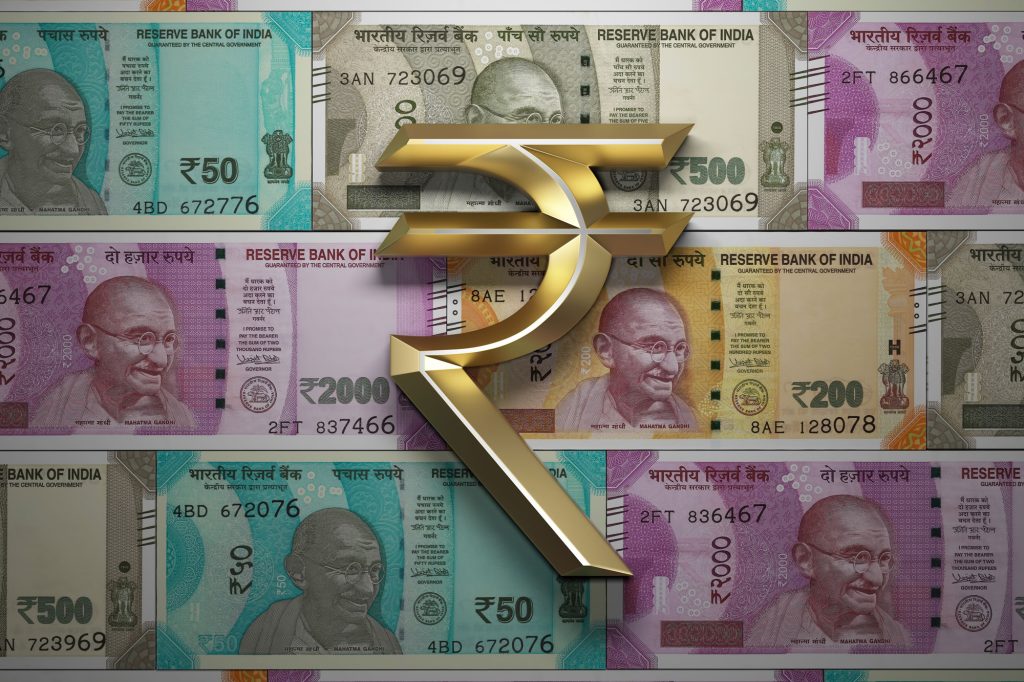
Forex Market Overview
The Indian Rupee (INR) showed resilience on Friday, 5 September 2025, holding steady near ₹82.15 against the US dollar, following bouts of volatility earlier in the week. The currency’s relative stability came amid a broadly weaker US dollar influenced by softening economic data and growing speculation over an imminent Federal Reserve interest rate cut.
The USD/INR pair traded in a tight range of 81.95 to 82.30 as Reserve Bank of India (RBI) interventions reportedly kept excess volatility in check, according to market sources.
Global Forex Dynamics Affecting INR
US Dollar Weakness
The US dollar declined across the board after weaker-than-expected ADP employment figures and rising jobless claims, fuelling market bets on a Fed rate cut as early as this month. This broad-based dollar softness supported the Indian Rupee, alongside other emerging market currencies.
Fed Rate Cut Expectations
Traders anticipate a 25 basis points cut in the federal funds rate in the Federal Reserve’s upcoming September meeting. Such easing would reduce the yield differential between US Treasuries and Indian government bonds, making INR-denominated assets more attractive to foreign investors.
Emerging Market Currency Movements
The INR outperformed peers like the Brazilian Real and South African Rand, which faced sharper selloffs due to country-specific concerns. Asian currencies including the Indonesian Rupiah and Philippine Peso also showed gains against the dollar.
Domestic Factors Supporting the Rupee
RBI’s Currency Management
The Reserve Bank of India has actively intervened in the forex market to prevent excessive INR depreciation, reportedly selling dollars and buying rupees in offshore markets.
RBI officials reaffirmed their commitment to maintaining orderly market conditions and supporting the currency amid fluctuating global liquidity.
Positive Trade Balance Signals
India’s trade deficit narrowed to $18.6 billion in August, an improvement from $21.2 billion in July, primarily due to lower crude oil prices and steady export growth. This narrowing deficit reduces pressure on the INR by curbing demand for foreign exchange.
Technical Analysis: USD/INR Outlook
-
Support Levels: 81.75, 81.40
-
Resistance Levels: 82.40, 82.80
-
Momentum: RSI currently at 52, indicating neutral momentum, with potential for a bullish breakout if the Fed confirms a rate cut.
Traders are watching the 82.50 resistance level closely. A sustained move above could trigger fresh buying interest, while failure to breach it might see the pair revisit lower support zones.
Analyst Insights
“The INR’s relative stability is a reflection of RBI’s active market management combined with favorable global liquidity conditions,” said Sameer Rao, Head of Forex Strategy at Quantum Capital. “However, the currency remains vulnerable to sudden shifts in oil prices or geopolitical risks.”
Rao added, “Investors should monitor US payroll data and crude oil price movements closely for cues on INR direction.”
Outlook & Key Risks
Upcoming Data & Events to Watch
-
US Non-Farm Payrolls (September 5, 2025) – Key to confirming Fed’s rate cut trajectory.
-
Reserve Bank of India Policy Review (Mid-September) – Guidance on inflation, liquidity, and forex intervention.
-
Geopolitical Developments – Any escalation in Middle East tensions or global trade issues could trigger sharp INR swings.
Risks
-
Sharp increases in global crude oil prices could widen India’s trade deficit and weaken the INR.
-
Unexpected hawkish signals from the Fed may strengthen the dollar and pressure emerging market currencies.
-
Sudden capital outflows amid global risk-off sentiment.
Summary
The Indian Rupee demonstrated cautious resilience on 5 September 2025, supported by a weaker dollar and RBI’s market interventions. While the currency is positioned well to benefit from potential U.S. monetary easing and improving trade balances, external risks such as oil price volatility and geopolitical uncertainties remain key challenges.
Market participants are advised to stay vigilant in the near term, especially around major U.S. economic releases and RBI’s forthcoming policy statements.