
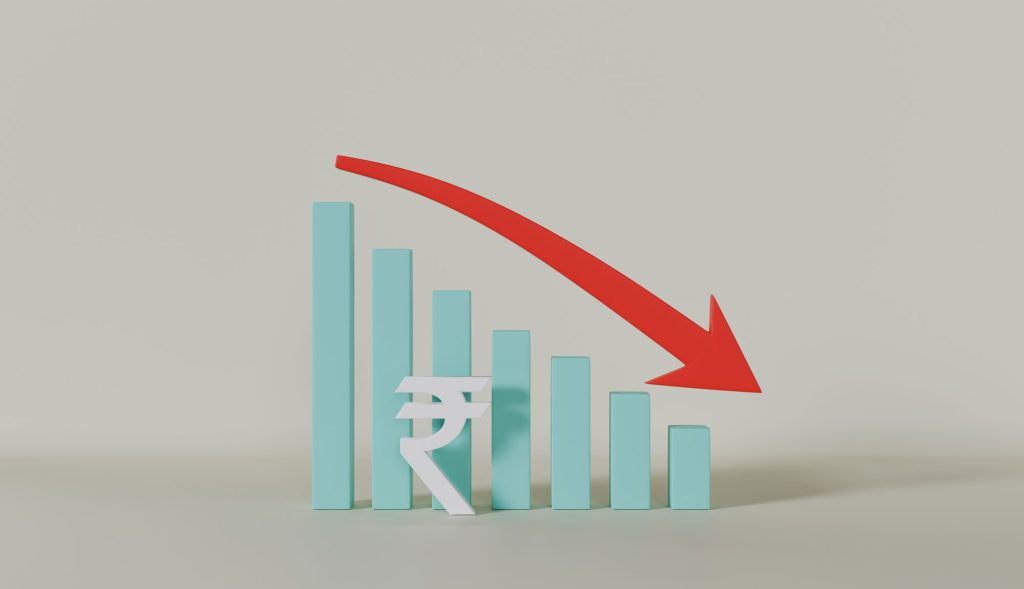
The Indian rupee (INR) weakened to a fresh record low near 88.33 per USD, extending a slide that began last week. The currency’s decline reflects a combination of rising importer hedging, leveraged speculative shorts, persistent capital outflows, and external macroeconomic pressures.
Market participants are closely monitoring RBI interventions, forward market dynamics, and global trade developments, as the rupee navigates an environment of heightened uncertainty.
Key Drivers Behind the INR Weakness
1. Importer Hedging Surge
Rising import costs, particularly for crude oil, machinery, and electronic components, have led Indian corporates to increase hedging activity in forwards and options. Higher hedge ratios create incremental demand for USD, amplifying depreciation pressures on the INR.
2. Speculative Short Positions
Leveraged trading accounts have intensified short-INR positions, betting on continued currency weakness. This speculative flow compounds the rupee’s downward trajectory, particularly during thin liquidity periods or when global risk sentiment is cautious.
3. Global Economic Headwinds
The INR is sensitive to slower global growth, trade frictions, and investor risk appetite. Persistent portfolio outflows from Indian equities reflect broader concerns about emerging market exposure amid global uncertainties. Any slowdown in China, Europe, or the U.S. can further pressure the rupee via trade and investment channels.
4. RBI Policy and Market Tolerance
The Reserve Bank of India (RBI) has historically intervened through spot and forward markets to smooth excessive volatility. Today’s gradual depreciation suggests that the RBI is permitting orderly weakening to maintain export competitiveness, while ensuring volatility does not escalate into disorderly price movements.
Corporate Implications
Corporates with import and export exposure must adopt proactive risk management strategies:
-
Increase hedge ratios: Protect profit margins against sudden USD/INR spikes.
-
Monitor forward premiums: Adjust positions according to term structures and cost of hedging.
-
Plan for tariff and trade risk: Hedging helps manage uncertainty from potential policy changes.
Exporters benefit from a weaker rupee, which enhances price competitiveness in global markets, but imported raw materials will cost more, highlighting the need for dynamic hedging strategies.
Trader Insights and Strategies
Traders navigating USD/INR should consider:
-
Technical levels:
-
Support: 87.80
-
Resistance: 88.50–88.60
-
Short-term pivot: 88.00
-
-
Forward markets and basis shifts: Monitoring 3-month and 6-month forward premiums provides insight into hedging demand and potential speculative pressures.
-
RBI signals: Sudden interventions via state-run banks or changes in open market operations can influence intraday price moves.
-
Volatility management: With speculative activity elevated, traders should use stop-loss orders and position sizing to navigate rapid moves in USD/INR.
Macro Context and Risk Factors
Several macroeconomic drivers are shaping the rupee’s path:
-
Trade Deficit: India’s persistent trade deficit increases USD demand, maintaining downward pressure on the INR.
-
Capital Flows: Outflows from foreign portfolio investors in equities and bonds reflect sensitivity to global growth and risk sentiment.
-
Inflation Concerns: A sharply weaker INR can push up imported inflation, particularly for energy and essential commodities.
-
Global Factors: Slower growth in major economies, geopolitical tensions, and commodity price swings all impact currency movements.
RBI’s policy approach aims to balance export competitiveness with financial stability, allowing a measured depreciation while discouraging disorderly speculative moves.
Technical Outlook and Market Levels
USD/INR Technical Key Levels:
-
Short-term support: 87.80
-
Resistance: 88.50–88.60
-
Pivot for intraday trades: 88.00
Forward market cues:
-
Rising forward premiums indicate persistent hedging demand, signaling continued downward pressure.
-
Changes in basis swaps can act as early warning signals for speculative positioning and volatility spikes.
A stabilization near current levels may help moderate imported inflation and provide trading ranges, while a break below 87.70 or above 88.60 could trigger significant market moves and RBI interventions.
Outlook for Investors and Traders
-
Short-term INR volatility is likely to persist due to hedging flows, speculative activity, and global macro risks.
-
Traders should combine technical analysis, forward market insights, and RBI cues to manage positions effectively.
-
Corporates should maintain flexible hedging strategies, adjusting exposure as term premiums and forward rates evolve.
-
A moderate stabilization near the new record low would relieve imported inflation pressures, while a further slide could necessitate policy signaling or market intervention.