
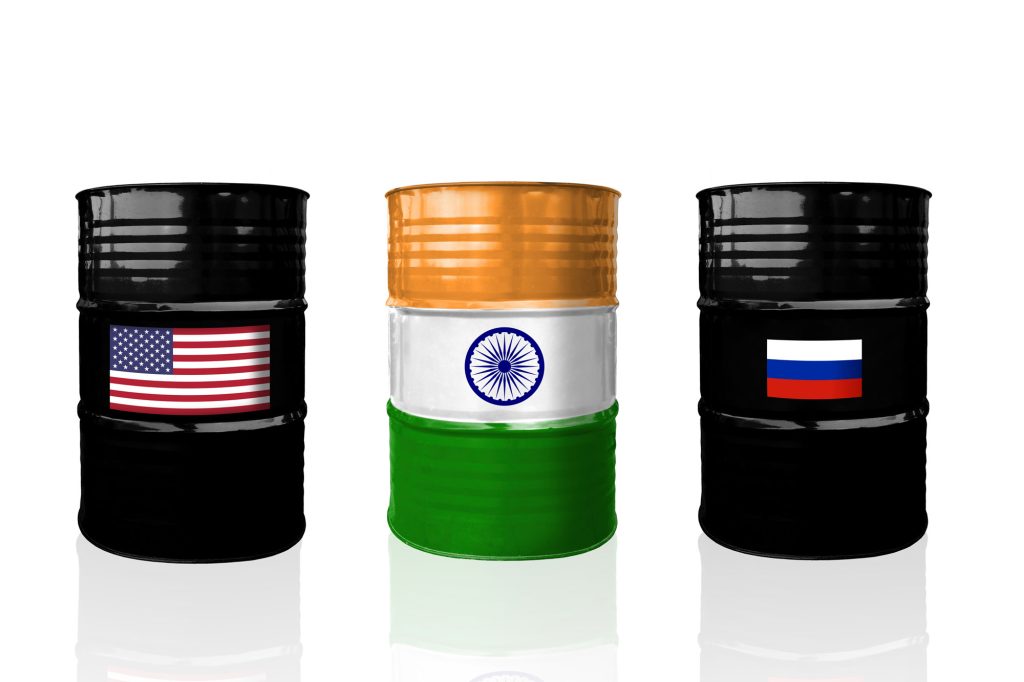
Oil Slides as Traders Weigh Supply Glut Over Diplomatic Tensions
Global oil markets extended their decline on Wednesday, with both Brent and WTI futures finishing lower, as growing concerns about a global supply surplus took precedence over escalating diplomatic tensions between the United States and India regarding Russian crude imports.
-
Brent crude slipped 1.3% to settle around $80.60 per barrel, its lowest in over two weeks.
-
West Texas Intermediate (WTI) dropped 1.6% to $77.10 per barrel.
Despite headline-grabbing developments on the geopolitical front, traders and institutional investors appear more focused on hard data—particularly the latest reports showing elevated crude stockpiles, slowing Chinese demand, and compliance issues within OPEC+.
U.S. Turns Up Heat on India Over Russian Oil Purchases
In a week dominated by geopolitical maneuvers, the Biden administration has quietly increased behind-the-scenes pressure on New Delhi to reduce its intake of discounted Russian crude. India has become one of the top buyers of Russian oil since the start of the Ukraine conflict in 2022, circumventing Western price caps by using non-dollar payment systems, third-party insurance, and shadow fleets.
According to diplomatic sources, U.S. officials in recent meetings reiterated that continued Indian engagement with Russia’s oil trade undermines international sanctions and indirectly finances Moscow’s ongoing war efforts. While the pressure stops short of threats or sanctions against India, Washington has made it clear that a course correction is “strategically important” for broader transatlantic unity.
However, India remains defiant. Energy ministry officials reiterated this week that the nation’s energy strategy is built on “cost-efficiency, security, and sovereignty.” Indian refiners argue that Russian crude offers a $5–$10 per barrel discount compared to Middle Eastern grades, providing crucial economic relief in a high-inflation environment.
India’s Finance Minister made it clear:
“We will continue to buy oil that is in our national interest, and price will remain the deciding factor—not politics.”
This firm stance from New Delhi all but confirms that no immediate reduction in Russian oil imports should be expected—explaining the lack of a bullish reaction in oil markets.
Oversupply Worries Resurface as Inventories Climb
While geopolitics have the power to move oil markets sharply in the short term, the bigger driver today was a raft of bearish supply-side developments:
1. U.S. Crude Inventories Rise Sharply
The Energy Information Administration (EIA) reported a 4.2 million barrel increase in commercial crude stockpiles for the week ending August 23, significantly higher than consensus estimates of 1.7 million barrels.
This data indicates:
-
Slower refinery activity.
-
Tepid fuel demand heading into the autumn season.
-
Potential weakening in U.S. consumer mobility and industrial output.
2. China’s Economic Indicators Disappoint
China’s latest manufacturing PMI fell to 49.5, back into contraction territory, dampening hopes for a strong second-half recovery. Diesel demand, in particular, has been weaker than expected as real estate and heavy industry remain sluggish.
Traders are now concerned that China’s total oil consumption in Q4 could underperform, putting a dent in global demand forecasts.
3. OPEC+ Production Discipline Falters
Sources within OPEC+ confirmed that Iran and Nigeria have exceeded their output quotas for the second consecutive month, raising questions about internal compliance. The group’s efforts to support prices through voluntary cuts by Saudi Arabia and Russia may be undermined by broader overproduction, creating an unintended oversupply environment.
Why the India-Russia Oil Story Isn’t Moving Markets—Yet
The market’s muted response to U.S.-India tensions can be explained by three key realities:
-
No Immediate Policy Change Expected: India is unlikely to act unless the U.S. offers incentives, such as favorable long-term contracts with Gulf states or inclusion in strategic oil reserve arrangements.
-
Russian Oil Finds Other Buyers: Even if India were to reduce purchases, Russia has ample alternative buyers, especially China, Indonesia, and Turkey. Global supply wouldn’t necessarily fall—it would just shift.
-
No Physical Disruption Yet: The absence of sanctions on Indian refiners or maritime operators means there’s no current physical disruption to supply chains.
Until the diplomatic situation escalates to actual trade friction or sanctions, markets will likely continue to focus on tangible fundamentals—stockpiles, demand data, and cartel actions.
Outlook: What Traders Are Watching
OPEC+ Meeting Next Week
Market participants are looking ahead to the early September OPEC+ meeting, where leaders will discuss whether to extend or deepen voluntary production cuts into Q4. A credible signal from Saudi Arabia could provide near-term support for prices.
U.S. Labor Data This Friday
The upcoming Non-Farm Payrolls (NFP) report will be critical in shaping expectations around U.S. energy consumption and inflation trajectory. A strong jobs number could boost confidence in Q4 fuel demand.
India’s Oil Import Breakdown
India’s Ministry of Commerce is expected to release updated import data for August in the next 10 days. Any dip in Russian volumes could reignite the bullish geopolitical narrative.
Conclusion
Despite the rising geopolitical noise between the United States and India over Russian oil, global oil markets remain grounded in economic reality: inventories are high, demand is uncertain, and supply discipline is fraying. Unless diplomatic pressure transforms into policy shifts or sanctions, oil prices will remain driven primarily by fundamentals.
With both Brent and WTI slipping below key psychological support levels, the risk leans to the downside in the near term. Only a decisive cut from OPEC+ or a geopolitical shock would be enough to reverse this momentum.