
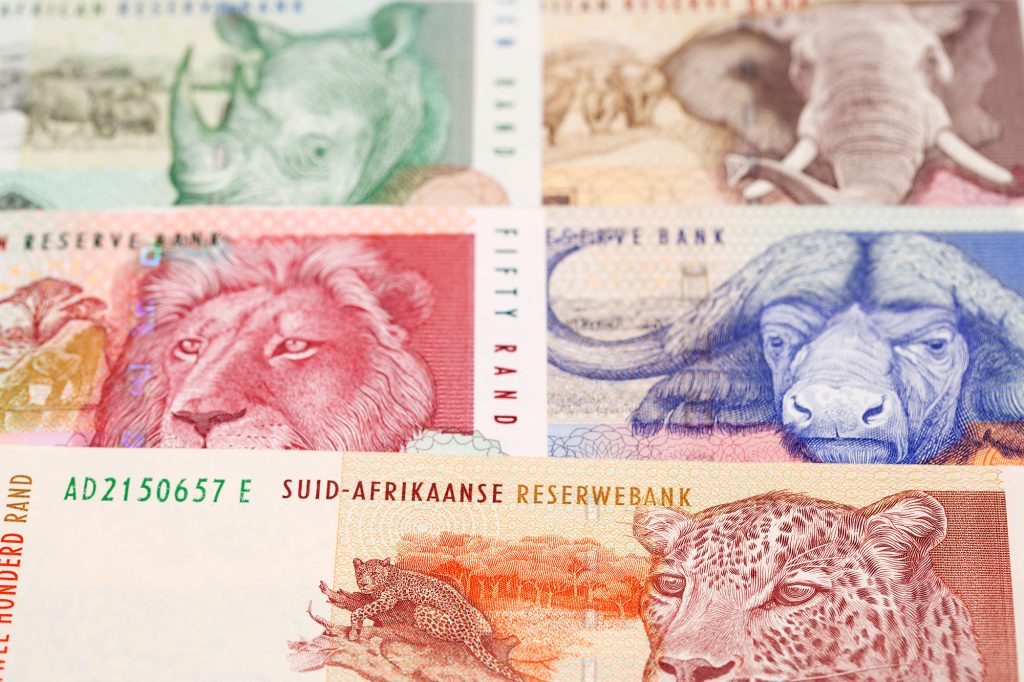
The South African rand weakened 0.5% to 17.7425/USD on August 21, 2025, as investors took a cautious stance ahead of the Jackson Hole Economic Policy Symposium. Market participants are awaiting Federal Reserve Chair Jerome Powell’s speech, which is expected to provide guidance on U.S. monetary policy and influence global capital flows, particularly to emerging markets like South Africa.
The rand’s decline was compounded by domestic inflation rising to 3.5% in July, slightly above expectations. This uptick adds pressure on the currency, as traders consider potential policy responses from the South African Reserve Bank (SARB).
Domestic and Global Factors Impacting the Rand
Several factors are currently shaping the rand’s performance:
1. Domestic Inflation Pressure:
July’s inflation reading of 3.5% reflects ongoing price pressures in consumer goods and energy sectors. Higher inflation can lead to tighter monetary policy by SARB, which may influence borrowing costs and domestic liquidity, affecting the rand. Analysts note that moderate inflation is still manageable, but combined with global factors, it contributes to market caution.
2. Bond Market Dynamics:
Yields on South African 2035 government bonds edged slightly higher, as inflation and global interest rate expectations influenced investor sentiment. The move reflects risk-adjusted pricing for holding longer-term assets amid uncertainty over both domestic monetary policy and global Fed actions.
3. U.S. Federal Reserve Influence:
Emerging market currencies like the rand are sensitive to U.S. monetary policy signals. Hawkish statements or higher-than-expected rate guidance from Powell could trigger capital outflows from EM assets, weighing on the rand. Conversely, dovish signals may support EM currencies by encouraging global risk-taking.
4. Global Risk Appetite:
Geopolitical tensions, commodity price fluctuations, and global economic growth forecasts continue to shape investor behavior. South Africa, being a commodity-exporting nation, is particularly influenced by commodity prices such as gold, platinum, and oil. A positive risk sentiment tends to support the rand, while risk-off conditions can trigger depreciation.
Technical Analysis
From a technical perspective, the rand is trading near short-term support at 17.70/USD, with resistance around 17.85/USD. Key levels to watch:
-
Support: 17.70/USD — recent buying interest and historical lows suggest a floor for short-term downside.
-
Resistance: 17.85–17.90/USD — a range cap that could limit upward gains if risk sentiment remains cautious.
Analysts suggest that range-bound trading is likely until Powell’s speech provides clarity. Any decisive break above resistance or below support could lead to a volatile post-event session, impacting both forex and emerging market equities.
Investor Behavior
Investor sentiment in the rand remains cautiously neutral:
-
Institutional investors are monitoring the Jackson Hole symposium closely, adjusting EM exposure via derivatives and currency hedges.
-
Retail traders are largely on the sidelines, preferring to wait for macro clarity before committing capital.
-
EM portfolio managers are balancing currency risk against equity and bond allocations, considering both domestic inflation trends and Fed policy signals.
Flows into rand-denominated assets have been modest, reflecting heightened caution ahead of Powell’s remarks. Analysts note that liquidity conditions may tighten in the short term, amplifying price swings when global signals emerge.
Broader Emerging Market Implications
The rand’s performance also mirrors trends across other EM currencies, such as the Brazilian real, Turkish lira, and Indian rupee. EM flows are sensitive to U.S. rate expectations, global liquidity, and investor risk appetite. Powell’s speech could influence:
-
Capital inflows/outflows to EM equities and bonds
-
Relative strength of commodity-linked currencies
-
Hedging activity in global FX derivatives markets
South Africa, as a commodity-exporting economy, is particularly impacted by oil, gold, and platinum prices, which affect both trade balances and foreign investment flows.
Outlook and Strategy
The rand is expected to remain volatile around Jackson Hole, with the following considerations for investors:
Short-term strategy:
-
Range-bound trading between support and resistance levels (17.70–17.85/USD)
-
Use of FX options to hedge against sharp moves post-Fed speech
Medium-term strategy:
-
Monitor SARB commentary and domestic inflation trends
-
Track commodity price movements and global EM risk sentiment
-
Assess FDI and portfolio flows for indications of sustained currency pressure or support
Analysts suggest that a dovish Powell speech could stabilize or strengthen the rand, while hawkish commentary may trigger outflows and downward pressure. Investors are advised to adopt a risk-managed approach, focusing on both domestic and global macro developments.