
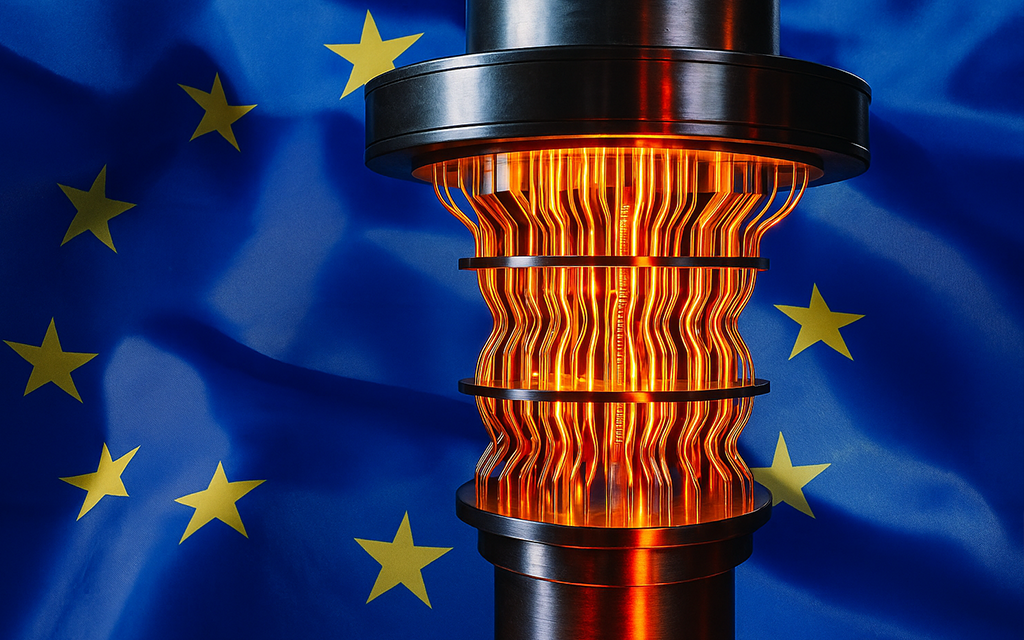
The European Union is ramping up efforts to close the significant financing gap facing the quantum computing sector, a field widely recognized as critical to the future of technology and economic competitiveness. Despite Europe’s strong academic and scientific contributions to quantum research, the continent has struggled to translate innovation into commercially viable companies due to a lack of sufficient investment capital.
As global powers like the United States and China accelerate their investments into quantum technologies, the EU’s challenge is to build a robust ecosystem that supports startups and scale-ups through access to capital, infrastructure, and talent. The European Commission’s new initiatives aim to create an integrated strategy to secure Europe’s leadership in this transformative industry.
Europe’s Quantum Finance Challenge
Quantum computing promises to revolutionize computing power by exploiting the principles of quantum mechanics, potentially solving problems in seconds that would take classical computers millennia. This advancement has applications across multiple sectors including cybersecurity, pharmaceuticals, logistics, and materials science. However, while Europe boasts top-tier research institutions and a rich talent pool, the translation of these innovations into scalable businesses is hampered by underfunding.
In recent years, venture capital funding for quantum startups in the EU has lagged behind that of other global leaders. European startups frequently rely on funding from non-European investors, which may lead to loss of strategic control and intellectual property outside the continent. Without a concerted effort to boost domestic and regional investment, Europe risks falling behind in what many consider the next industrial revolution.
EU’s Strategic Funding Initiatives
To confront these challenges, the European Union has launched a multi-pronged approach:
1. Dedicated Scale-Up Funds:
The EU is establishing funds specifically designed to support technology companies in the scale-up phase, including quantum computing startups. These funds will work alongside private investors to amplify available capital, aiming to bridge the gap between early-stage grants and large-scale commercial funding.
2. Research and Innovation Programs:
Building on existing frameworks like Horizon Europe and the Digital Europe Program, the EU continues to pour resources into foundational research and the development of quantum infrastructure. This includes investments in quantum communication networks, hardware development, and software ecosystems.
3. Encouraging Collaboration and Ecosystem Building:
Recognizing that innovation thrives in collaborative environments, the EU is promoting stronger connections between academia, industry, and finance sectors. By fostering partnerships across member states, the initiative seeks to create a pan-European innovation hub that can compete with global counterparts.
The Role of Talent and Infrastructure
Investment in talent development is equally vital. Europe faces a shortage of highly skilled quantum engineers, physicists, and software developers capable of driving this complex technology forward. The EU is therefore emphasizing education, training programs, and attracting global talent to fill this gap.
Infrastructure projects, including the development of quantum testbeds and pilot facilities, provide startups and researchers with the necessary environments to experiment and refine their technologies before commercial deployment.
Strategic Importance of Quantum Computing for Europe
The stakes are high. Quantum computing is poised to disrupt existing industries and create new market opportunities, making it a key pillar of the digital economy of the future. For Europe, leadership in quantum technologies means not only economic growth but also enhanced digital sovereignty — reducing reliance on foreign technologies and protecting critical infrastructures.
A failure to adequately finance and support this sector risks ceding technological dominance to external powers, which could have long-term strategic and security implications.
Challenges Ahead and the Road to Success
While the EU’s roadmap is ambitious, the path forward is filled with challenges. Scaling quantum startups requires patience and risk tolerance from investors, as commercial applications are still in early stages. Navigating regulatory frameworks across diverse member states can slow down innovation and financing efforts.
Moreover, competition is fierce. The U.S. and China have already established deep financial ecosystems supporting quantum technologies, backed by strong government-industry collaborations and substantial funding.
To succeed, Europe must not only increase financial flows but also streamline regulatory processes and foster a culture of innovation and entrepreneurship that embraces long-term investment in frontier technologies.
Conclusion
The European Union’s bold initiatives to bridge the quantum computing finance gap mark a pivotal moment for the continent’s technological future. By strategically boosting funding, enhancing collaboration, and investing in talent and infrastructure, the EU is laying the foundation for a competitive and sustainable quantum ecosystem.
For traders, investors, and technology enthusiasts, this movement signals a new wave of innovation that could redefine industries and create lucrative opportunities in the years to come. ForexFlash will continue to monitor developments in this critical sector as Europe strives to secure its place at the forefront of the quantum revolution.